Yunnan festivals: the minority festival calendar
云南少数民族节日 —— 时间与地点 · 从昆明出发
Yunnan runs on a second calendar. Alongside the trade fairs there are the festivals of the province's twenty-five minority peoples: water fights in Jinghong at Dai New Year, torchlight processions in the Yi districts, and a banquet street kilometres long in Lüchun. For anyone visiting Yunnan for business, timing a trip around one of these is the part people remember.
A note on dates. Yunnan's big festivals follow lunar or ethnic-minority calendars, and the solar date moves each year. Where an official 2026 date has been published, by a prefecture government or the organiser, I give it. Where only the lunar rule is known, I say so and mark the solar date as an estimate.
| Festival | Group | Place | Date | Timing |
|---|---|---|---|---|
| Water-Splashing Festival | Dai | Jinghong, Xishuangbanna | 12–15 Apr 2026 (published) | Dai New Year, solar mid-April |
| Water-Splashing Festival (Dehong) | Dai | Mangshi, Dehong | ~12–14 Apr 2026 | Solar mid-April |
| Torch Festival | Yi | Chuxiong, Shilin, Weishan | Lunar 6/24–25; 2026 ≈ early Aug (est.) | Lunar-variable |
| Third Month Fair (March Street) | Bai | Dali | 1–7 May 2026 (published) | Lunar 3/15–21 |
| Raosanling (Wandering the Three Temples) | Bai | Dali | Lunar 4/23–25; 2026 ≈ early Jun (est.) | Lunar-variable |
| Shibaoshan Song Festival | Bai | Jianchuan, Dali | Lunar 7/27; 2026 ≈ Sep (est.) | Lunar-variable |
| Sanduo Festival | Naxi | Lijiang | Lunar 2/8; 2026 ≈ 26 Mar (est.) | Lunar-variable |
| Knife-Pole Festival | Lisu | Lushui/Nujiang; Yangbi | Lunar 2/8; 2026 ≈ 26 Mar (est.) | Lunar-variable |
| Longstreet Banquet (October Year) | Hani | Lüchun, Honghe | 14–18 Nov 2026 (published) | Lunar 10th month |
| Kuzhazhazha (June Festival) | Hani | Honghe (Yuanyang, Lüchun) | Lunar 6th month; 2026 ≈ early Aug (est.) | Lunar-variable |
| Zhuanshan Jie (Mountain-Circling) | Mosuo | Lugu Lake, Ninglang | Lunar 7/15; 2026 ≈ late Aug (est.) | Lunar-variable |
| Lamugu (Pulling the Wooden Drum) | Wa | Cangyuan, Ximeng | Village-set, often winter | Not calendar-fixed |
| Sankang Festival | Bulang | Menghai, Xishuangbanna | ~mid-April (Dai-calendar New Year) | Dai-calendar |
| Hounan Festival | Bulang | Lincang area | Lunar-variable, after harvest | Lunar-variable |
| Shangri-La Tibetan festivals | Tibetan | Shangri-La/Deqin, Diqing | Tibetan-calendar variable | Variable |
Water-Splashing Festival (傣族泼水节) (Dai, Jinghong)
The Dai New Year turns Jinghong into a city-wide water fight for four days. White-clad crowds exchange bowls of water that wash away the old year's bad luck, with dragon-boat races on the Lancang River, peacock dance, lantern releases and street parades. Everyone gets soaked; dress for it and seal your phone. It is Yunnan's largest and best-attended minority festival. 2026: 12–15 April, official four-day schedule published (source; confidence high). Fly Kunming–Jinghong, about fifty minutes, several flights daily; hotels sell out weeks ahead.
Dehong Water-Splashing Festival (德宏泼水节) (Dai, Mangshi)
Dehong celebrates Dai New Year alongside Xishuangbanna, with fewer tourists and a more local feel. Mangshi's squares fill with water buckets, peacock dances and Dai food stalls, and the Jingpo munao dancing sometimes joins the programme. 2026 runs around 12–14 April. The Mangshi Water-Splashing Marathon is listed for 12 April (source); the exact full-day schedule is not confirmed. Fly Kunming–Mangshi about an hour, or high-speed rail via Baoshan.
Torch Festival (火把节) (Yi, Chuxiong / Shilin)
The Yi people's biggest festival honours fire: bullfights, wrestling, horse races and costume parades by day, then pine torches at dusk, marched through the fields and thrown onto a central bonfire. Shilin and Chuxiong stage the largest organised events. Lunar 6/24–25; the 2026 solar date falls around early August by my conversion and was not published (lunar rule source; confidence medium on timing, high on the rule). Date not confirmed. Shilin is about ninety minutes from Kunming; Chuxiong two hours by high-speed rail.
Third Month Fair / March Street (三月街) (Bai, Dali)
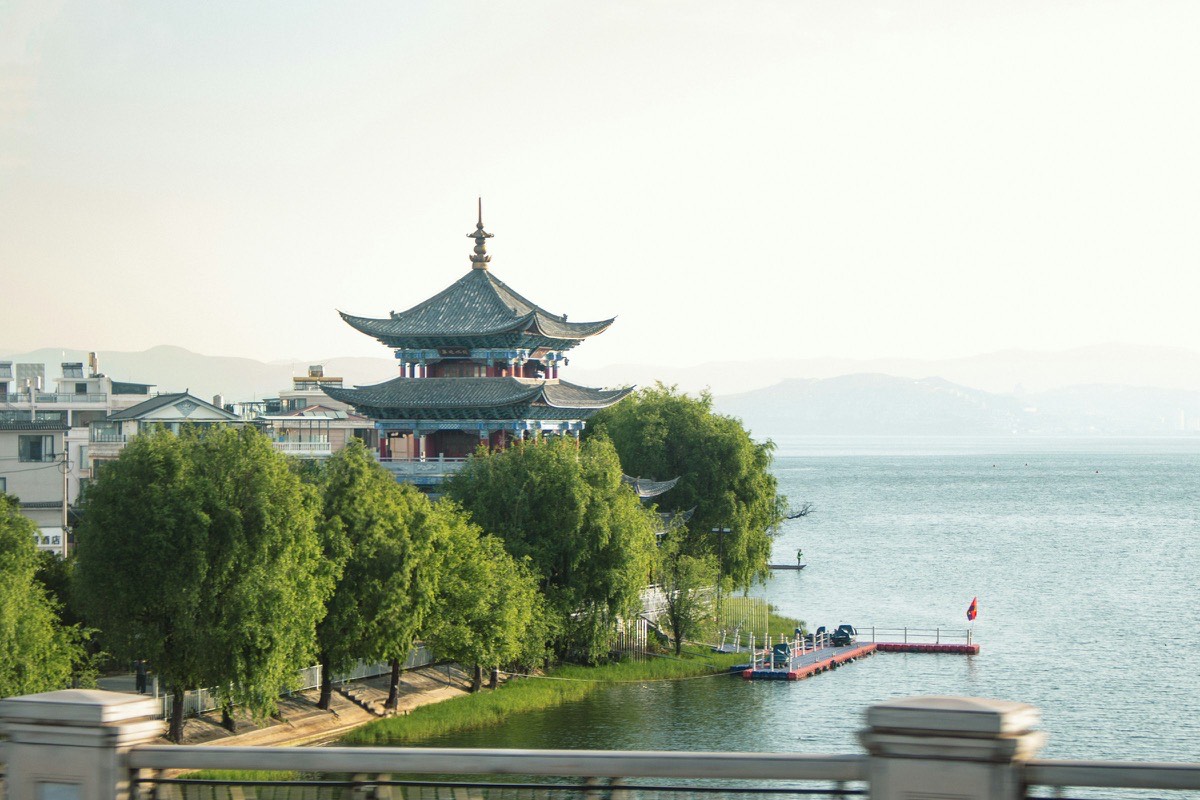
A 1,300-year-old trade fair and horse-race meeting that Bai, Yi and Tibetan traders still attend: week-long racing, folk singing, and a huge market for herbs and handicrafts under Cangshan. 2026: 1–7 May, officially announced by the Dali government (source; confidence high). Kunming–Dali high-speed rail takes about two hours; the racecourse is a fifteen-minute walk from Dali Old Town.
Raosanling (绕三灵) (Bai, Dali)
A three-day spring pilgrimage in which village teams, led by two elders carrying a willow branch, walk and dance between three temples around Erhai Lake, hosted by every village en route. The Bai people's most deeply rooted religious festival, national intangible heritage. Lunar 4/23–25; the 2026 solar date falls around late May/early June by conversion and was not published (lunar rule source; high confidence in the rule, low in the 2026 date). Base in Dali Old Town; the route passes Xizhou, reachable by local bus or bike.
Shibaoshan Song Festival (石宝山歌会) (Bai, Jianchuan)
The great gathering for Bai antiphonal singing: thousands of singers camp on Stone Treasure Mountain and trade improvised songs judged by wit. Daytime contests mix with visits to the ninth-century grottoes at Shizhong Temple. Far less touristed than Dali's main events. Lunar 7/27; 2026 ≈ September (estimate, source; exact date could not be verified). Train or bus from Dali to Jianchuan, about two hours, then a local minibus; arrange a guide in Dali as there is no English signage.
Sanduo Festival (三朵节) (Naxi, Lijiang)
Lijiang's Naxi people honour Sanduo, their protective war god on a white horse: visits to Beiyue Temple at the foot of Jade Dragon Snow Mountain, Dongba ceremonies, costume and group dancing in the old town squares. The Naxi's principal festival and a legal holiday in Lijiang. Lunar 2/8; 2026 ≈ 26 March (estimate, source; exact solar date could not be verified). Lijiang is about three hours from Kunming by high-speed rail.
Knife-Pole Festival (刀杆节) (Lisu, Nujiang / Yangbi)
Lisu men perform "climbing the knife mountain and descending the sea of fire": barefoot over burning embers at night, then up a ladder of sharpened blades, honouring the Ming-era hero Wang Ji, framed by shaman-led ritual and dancing. Yangbi's version is provincial intangible heritage. Lunar 2/8; 2026 ≈ 26 March (estimate; Dali government source for the lunar rule; exact 2026 date could not be verified). Nujiang's Lushui is the hardest to reach: five to seven hours of mountain road from Dali or Baoshan; the Yangbi venue is closer, about two hours from Dali.
Longstreet Banquet (长街古宴) (October Year, Hani, Lüchun)
Recognised as the world's longest banquet: the Hani tenth-month New Year lines Lüchun's main street with thousands of bamboo tables end to end for kilometres, villagers in embroidered costume serving rice, river fish and home brew. The 2026 edition set out over 3,700 tables. 2026: 14–18 November, official, with the opening banquet on 17 November (Honghe culture-tourism bureau; confidence high). Lüchun has no railway: roughly seven to eight hours by long-distance bus from Kunming, or four from Mengzi by road. Mountain roads; hire a car with driver and allow a full day each way.
Kuzhazhazha (苦扎扎节) (June Festival, Hani, Honghe)
The Hani "June Year", a threshing-ground festival that pleases the sky god and drives pests from the fields: a swing of wild vines (riding it is the highlight), cattle slaughtered, night dances under torches in the terraced-field villages. Smaller and more intimate than the Longstreet Banquet. Lunar sixth month, three days around lunar 6/24; the official Honghe holiday has fallen in late July or August, and the 2026 solar date could not be verified (county-government source for the rule; estimate early August). Base in Yuanyang's Xinjie town; five to six hours from Kunming by bus or car.
Zhuanshan Jie (转山节) (Mountain-Circling, Mosuo, Lugu Lake)
The Mosuo's grandest festival honours Goddess Gemu, the mountain spirit of Lugu Lake: families circle Lion Mountain on horseback and on foot, burn pine and juniper incense at the Goddess Cave, picnic and dance all afternoon. Provincial intangible heritage since 2005–06. Lunar 7/15; 2026 ≈ late August by conversion, though a reported organisation meeting of 3 September 2026 suggests the official event ran early September (lunar rule source; confidence medium on the 2026 date). Fly or rail Kunming–Lijiang, then about four hours by road to the lake; stay lakeside at Lige or Daluoshui to walk to the rituals.
Lamugu (拉木鼓) (Pulling the Wooden Drum, Wa, Cangyuan / Ximeng)
In this revived Wa ceremony, men fell a tree, hollow it into a sacred drum and haul it to the village by rope, singing pulling-songs while the village feasts. The drum once carried the Wa people's voice to the spirits; its arrival renews the village's prosperity. Not calendar-fixed. Each village sets the day, often in winter (source; confidence medium). Fly Kunming–Lincang, then three to four hours by road to Cangyuan; both areas are remote, so hire a car with driver.
Sankang Festival (桑康节) (Bulang, Menghai)
The Bulang New Year, timed with the Dai Water-Splashing Festival and centred on Bulang plucked-string singing, itself national intangible heritage: round-table feasts, antiphonal songs, water blessings in villages around Menghai and Daluo. Mid-April alongside the Dai calendar; the exact 2026 date could not be verified (China Folk Literature and Art Association source). Fly Kunming–Jinghong, then about two hours by road; one trip covers both this and the Jinghong water festival.
Hounan Festival (厚南节) (Bulang, Lincang)
A Bulang thanksgiving festival after the harvest: ancestor offerings, village feasts and the community dance-and-song gatherings that define Bulang social life. One of the least touristed festivals in Yunnan; visitors are treated as guests rather than spectators. Lunar-variable, after harvest; date specifics could not be verified beyond that (source). From Kunming fly or bus to Lincang, then road to Shuangjiang; allow two travel days each way.
Tibetan festivals in Shangri-La & Deqin (香格里拉藏族节日)
Diqing's Tibetan communities keep a full festival calendar: masked cham dances at monasteries such as Songzanlin, the Gedong (Gatong Phopa) winter gathering, and Tibetan New Year (Losar) feasting and horse events in February. Dates follow the Tibetan calendar and vary each year; Named 2026 dates for specific festivals are not confirmed (overview source). Fly Kunming–Shangri-La about an hour; Deqin is a further four to five hours by bus.
Compiled 2026-11-23 from prefecture-government and reference sources cited inline. Lunar-rule solar conversions marked "est." are estimates, not published dates. If you want a festival visit built into a business trip, get in touch.